


Department OF Urology
Urology
The Department of Urology provides medical and surgical care for diseases of the urinary tract in men and women and for selected conditions of the male reproductive system. Urologists commonly manage disorders involving the kidneys, ureters, bladder, urethra and prostate. Patients may present with kidney stones, difficulty passing urine, recurrent urinary infection, blood in urine, urinary retention, incontinence, prostate enlargement, urethral narrowing or suspected urinary-system cancer.


Advanced Care for Kidney and Urinary Disorders
Stone disease is a major component of urology. Small stones may pass with appropriate medical management, while larger or obstructing stones may require procedures. Depending on the location and size of the stone and the hospital’s equipment, treatment may include ureteroscopy, laser lithotripsy, retrograde intrarenal surgery (RIRS) or percutaneous nephrolithotomy (PCNL). The exact technologies available should be verified.
Treatment & Procedures
Conditions We Treat
- Kidney and ureteric stones
- Benign prostate enlargement
- Urinary tract infection
- Urinary obstruction and retention
- Blood in urine / haematuria
- Urethral stricture
- Urinary incontinence
- Bladder disorders
- Testicular and scrotal conditions
- Selected urological cancers
Procedures / Services to Verify
- Cystoscopy
- Ureteroscopy (URS)
- Laser lithotripsy, where available
- RIRS, where available
- PCNL
- TURP or prostate surgery
- Urethral dilatation / urethrotomy
- Urological laparoscopy, where available
- Catheter and stent procedures
- Biopsy / cancer surgery, where available
Urology Expertise
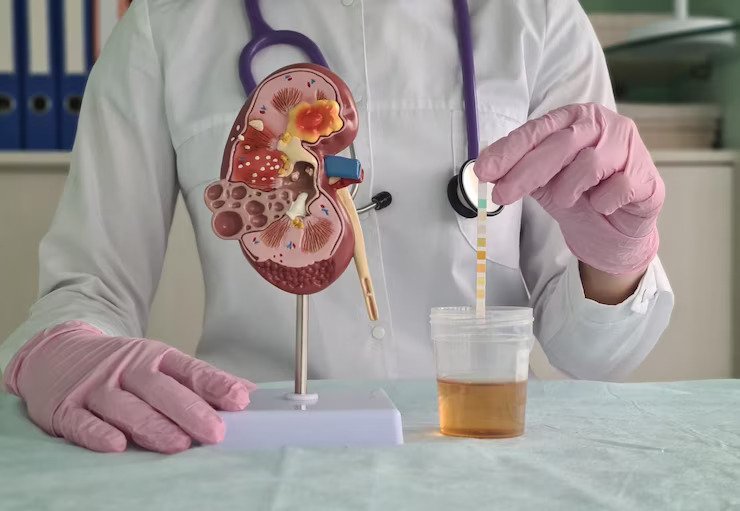
Prostate enlargement can cause weak urinary stream, urgency, frequency, night-time urination or retention. Treatment ranges from observation and medicines to endoscopic surgery such as TURP or other techniques. Urology also addresses urinary infections, bladder dysfunction, urethral stricture, incontinence, testicular conditions, and selected urological cancers. Laparoscopic or minimally invasive surgery may be offered for suitable kidney, ureter, bladder or prostate conditions where expertise is available.
The urology page should be clearly separated from Nephrology because urology is primarily a surgical specialty while nephrology focuses on medical kidney disease. Collaboration remains essential when patients have both structural urinary problems and impaired kidney function. Cancer procedures, paediatric urology, andrology, reconstructive urology, laser prostate surgery and advanced laparoscopy should be listed only after specialist verification. Patients should be encouraged to seek prompt assessment for visible blood in urine, inability to pass urine, fever with urinary obstruction or severe flank pain.
FAQ
Here are some answers to Frequently Asked Questions.

Does every kidney stone need surgery?
No. Small uncomplicated stones may pass naturally. Surgery is considered based on size, location, obstruction, infection, pain and kidney function.
What symptoms can an enlarged prostate cause?
Weak stream, difficulty starting, urgency, frequency, night-time urination, incomplete emptying and retention are common symptoms.
What is cystoscopy?
Cystoscopy uses a small camera passed through the urethra to examine the bladder and urethra.
What is RIRS?
RIRS is a minimally invasive procedure using a flexible scope passed through the urinary tract to reach kidney stones, often with laser treatment.
What is PCNL?
PCNL removes selected large or complex kidney stones through a small tract created through the back into the kidney.
Is blood in urine always caused by stones?
No. Haematuria can have many causes, including infection, stones, prostate disease and urinary cancers, and should be evaluated.
Can recurrent urine infections need urology review?
Yes. Recurrent infections may require evaluation for stones, obstruction, bladder problems or other underlying causes.
Can a urologist treat diseases of the female reproductive system?
A urologist commonly treats diseases of the urinary tract and the male reproductive system. Some urologists can treat urinary problems in females. These include bladder inflammations, urinary tract infections, and cancers. The urologist may refer you to a gynecologist if conditions related to the uterus, ovaries, fallopian tubes exist.
What is a urethral stricture?
A urethral stricture is narrowing of the urine passage that can reduce flow and cause infections or retention.
Do urologists treat kidney disease?
Urologists treat structural and surgical kidney/urinary conditions. Medical kidney disease is generally managed by nephrologists, often collaboratively.